Posts Tagged ‘Trenchless’

Camden Water Line Replacement – $250 Off!

Friday, February 10th, 2012

A broken water line is a big problem for any Camden homeowner. Your main water line is one the most important parts of your plumbing system, so a leak or break is a huge inconvenience. Not to mention the damage it can cause to your home or yard!

Some symptoms of a broken water line are lower water pressure, water pooling in your yard, or higher water bills. If you notice any of these problems, you should call Resolve Rooter right way. We have the technology to replace your water line with minimal damage to your yard, and we can do it quickly so you won’t be out of water for long. As a special incentive, we are offering $250 off Full Water Line Replacement! A problem with your water line is not something you should ignore, so if you suspect that your line is leaking or breaking, give us a call right away! We are available 24/7, and our trenchless technology experts are ready to help!

Call for details!


Allentown Water Line Tips: Why Water Line Replacement and Repair is Not a Do-it-Yourself Job

Wednesday, February 1st, 2012

Even if you are comfortable doing some of the minor plumbing repairs in your Allentown home, you should never attempt to replace a main water line on your own. You could potentially hit an underground utility line and do major damage, not only to your home, but the homes around you as well.

Only a qualified plumber has the experience and required tools to replace the broken line and affected pipes. Additionally, the sooner you call a qualified plumber to repair or replace your main water line, the less potential there will be for further damage to your home. If you aren’t sure whether or not you need repair work on your water line, there are some definite signs to look out for.

Water backing up in your yard is one of the most obvious indications of a main water line break or leak, but you could also notice drops in water pressure or high water bills before this happens. If you notice any of these issues, it’s best to call a plumber before it turns into a major hassle and expense.

While extreme weather can cause a water line to break, it’s typically caused by corrosion or root penetration. This is another important reason to have your pipes and plumbing system inspected once a year by a qualified plumber. Video scans of your pipes can detect any issues before they get worse.

Plumbers are also able to repair and replace the water line in your Allentown home with advanced technology that does not require digging up your yard. Call Resolve Rooter if you notice any obvious problems or suspect a leak in your main water line. Replacing a water line should be handled by a professional, and we have the experience, skills, and proper equipment required to get the job done safely and efficiently.

Receive a Free Backflow Preventor and Reducing Valve!

Friday, December 9th, 2011

Resolve Rooter is offering a great special: get a free backflow preventor and reducing valve with a full water line replacement! If something is wrong with your main water line, you have a big problem. A leak or a break in your water line can flood your yard and deprive your home of water. If you notice that you have higher water bills or that you have significantly lost water pressure, call Resolve Rooter right away! And with this great deal, not only will we use trenchless technology to replace your water line with little damage to your yard, but you will also get a free backflow preventor and reducing value. These upgrades will make your whole plumbing system work better and help your new water line last longer!

For more information, call us today!

Offer expires 12/31/2011

Glassboro Plumber Tip: Signs that You Have a Sewer or Water Line Issue

Wednesday, December 7th, 2011

The last thing anyone in Glassboro wants to deal with is a water line or sewer issue. But, it happens. Pipes freeze, crack, and get old and eventually they fail. But, if you recognize the signs of a problem before it gets really bad you can take care of it quickly. So, to help stay in front of the problem, here are some signs you should watch for.

  • Increased Water Use – Are you suddenly using way more water than you ever did before? Whether you first notice an uptick in your water consumption or your most recent water bill just gave you a small coronary, this is a sure sign that a leak has sprung somewhere in your plumbing.
  • Odd Smells in Your Drains – Your plumbing system is designed so you never have to smell anything. If there is a smell coming from your drains it can be due to anything from a dried out drain trap to a backup in the sewer line. If pouring a fresh gallon of water down the drain doesn’t solve the problem, it’s time to call for help.
  • Slow Flushing or Draining – When clogs start to form in your drains and sewer line, one of the first symptoms is a universal slowing of the drains in your house or business. It could be something minor like a clog in a single pipe but if you notice every drain suddenly moving much slower, possibly combined with odd smells in the drains, you may have a much larger clog in the main sewer line.
  • Consistently Wet Lawn – If you spring a leak in a water line or sewer line under your lawn, the only way you’ll notice (short of watching your water meter like a hawk) is when the water pools up above your lawn. But, usually before that happens, dampness will form. If it hasn’t rained in a week and the ground is still wet to the touch, combined with any of the other symptoms on this list, it may be a water or sewer line issue.

When you have a problem in your sewer line or water line, it can grow slowly over time, so if you pay close attention and catch one of these issues early enough, it will be much easier to fix the problem right away.

Causes of Sewer and Water Line Obstructions: A Guide from a North Plainfield Plumber

Friday, December 2nd, 2011

One of the most common causes of a sewer or water line problem is obstruction. While much more common in a drain or sewer line, obstructions can occur in any pipe in your North Plainfield home and in the past, diagnosing the problem was not always easy. How can you be sure where the obstruction is or how it was formed if you can’t see it?

Today, that problem has been remedied by trenchless technology which allows a plumber to look inside your pipes through a specially designed video inspection line. This works with any of the pipes on your property, including those buried under your lawn such as the sewer line. So, what could be causing your slow draining, potentially clogged sewer line? Here are some possibilities:

  • Grease and Food – If you put grease down the drain in your kitchen, it can build up anywhere in your pipes, including in the sewer line. Combined with the food particles and paper products regularly put down the drain, this can create a bulky blockage that stops up the water flowing out of your home.
  • Unflushables – Very few things are designed to be flushed down the drain. Toilet paper is designed for it, but almost no other type of paper fits the bill. Napkins, paper towels, tissues – none of them should go down any drain because they don’t break down in water. In fact, most paper products are designed to absorb water, which will lead to a sure clog.
  • Roots – Water lines under your property are subject to infiltration by roots from nearby trees and shrubs if not carefully maintained. It could have been a design flaw when the house was built or it could be a tree or shrub you planted since without checking where those pipes were located. Either way, the damage those roots can cause is substantial.
  • Mineral Build Up – High mineral levels in your water can lead to build up in the pipes over time. If your pipes are more than 40 years old and you have water pressure issues, this might be the source. Water testing will determine if your water is hard.

Whatever the cause, if you notice your drains slowing, your water pressure dropping or if any leaks spring in your water or sewer lines, a thorough video inspection is called for to pinpoint the problem.

Why You Might Need Video Inspection for Your Stroudsburg Home’s Water or Sewer Line?

Wednesday, November 30th, 2011

When you suspect a problem in your pipes, the first thing you should do is call for an inspection. Never assume you need a new pipe line installed or that your Stroudsburg house is about to be flooded. It could be as simple as a small crack that can be sealed easily or a clog from excess food and grease being put down the drain.

In the past, inspection was a hit or miss process. Using trial and error a plumber would attempt to determine the source of the problem. However, with modern trenchless technology and the low cost of video equipment, it is now possible to look inside the pipe and see what the problem is directly.

How Video Inspection Works

The process varies depending on the length of pipe that needs to be inspected. For instance, for a sewer line or water line, a small hole is dug to access the pipe. However, inside this may not be necessary depending on where your plumber suspects the problem originates.

That said, pipe inspection is most commonly needed for underground lines that cannot be accessed without some digging. Instead of digging up the pipe completely, a video line can be used to check for specific problems.

Once your plumber has access to the pipe line, they will insert the video inspection unit and check for things like roots, clogs, leaks, and cracks. This is such a powerful tool because instead of guessing where the problem is located and repairing based on those assumptions, your plumber can now be 100% sure of the problem and solve it accordingly.

The process is relatively simple and it saves a tremendous amount of money when pipe replacement is not needed. In some cases, a simple repair or high speed jetting solves the problem and the homeowner is left with a modest bill instead of a five figure punch to the gut. Whether a video inspection is right for you depends on the problems you are having, but the only way to be sure is to call a professional and discuss your observations.

Common Scotch Plains Water Line Problems

Monday, November 28th, 2011

Everyone needs water in Scotch Plains. It keeps us clean, provides us with a clean drinking source and helps us cook food and wash clothes. So, when a problem occurs with the water line, it can be disruptive to every aspect of everyday life. Here are some common water line problems and solutions you can implement to solve them as fast as possible:

  • Burst Pipe – The biggest problem you can have is a burst pipe. This is a major problem and one that needs to be solved immediately. If your pipe bursts or starts to leak, turn off the main water supply immediately and call an emergency plumber. You’ll want to have it patched as soon as possible to return normal water service to your home.
  • Noisy Pipes – Noise in the pipes is a slightly less disastrous problem but it can lead to bigger problems down the road if not dealt with. Usually, it is due to air in the pipes which can create a loud banging sound. If your pipes are vibrating or banging, the easiest solution is to turn off the water supply and drain your pipes completely, then fill them back up to remove the air build up.
  • Water Pressure – Low water pressure can be due to a number of problems, from a small leak somewhere to an issue in the incoming water supply. If you notice water pressure dropping in your home, call a professional to inspect the problem and offer potential solutions.
  • Sediment in the Pipes – If suddenly you are seeing excess sediment, rust, or other debris in your water it is probably from an aging pipe. While this doesn’t necessarily signal that your pipe is about to burst, it can be a sign of potential problems in the future. Build up from hard water or erosion can both be major problems if not fixed right away.

Water line problems can range from small nuisances to major disasters that threaten your entire home, but they should all be treated with equal import. If something happens to your water line, don’t waste time trying to track down a solution. Turn off the water supply and call a professional and ask about trenchless water line replacement.

Environmental Benefits of Trenchless Pipe Replacement: A Guide from Flemington

Wednesday, November 23rd, 2011

Pipe replacement is a messy business. For decades, the only real way to do it was to rumble in with a big machine (or men with plenty of shovels) and dig up your Flemington property to access the leaking, cracked pipe. However, with modern technology, trenchless pipe repair and replacement is now possible and while the biggest benefits are to your wallet and your lawn, you might also be interested to know how environmentally friendly the process is.

Less Resources Needed

Have you ever seen someone digging up a pipeline? The equipment needed is impressive. Backhoes, trucks and multiple workers to get the old pipe out of the ground and a new one in. And once the process is completed, the concrete and lawn destroyed by the digging need to be replaced. It’s a very invasive procedure.

With trenchless technology, most of those resources are not needed. This means less fuel used to power large machines, less destruction of your property and no impact on the roadway or sidewalks that would require paving once completed.

Existing Pipe Pathways

Have you ever considered the impact a pipe line being laid has on the ecosystem beneath your property? Digging up all that space and displacing plants, animals and insects alike can have a tremendously negative impact on the micro-ecology on your property.

Trenchless replacement allows a plumber to use the existing pipe pathway beneath your property, which avoids displacing anything with fresh digging. It also doesn’t impact the plants or trees growing on your property. You gain a new pipe line without any damage to the carefully manicured landscaping you’ve done on your property.

Minimal Subsoil Impact

Even when laying new pipes, trenchless technology only affects the space underground where the pipe will be laid. This tears up far less of the subsoil which has a less extensive environmental impact on the water shed around your home.

There really is no reason to use a traditional exhume and pull pipe replacement method when trenchless technology makes it possible to just as easily replace the pipes for the same or less money and minimal environmental impact. Depending on your circumstances and the scope of the work that needs to be done, your pipe repair or replacement may be significantly better served with trenchless technologies.

Components of Trenchless Water Line Replacement: A Tip from Mt. Holly

Friday, November 18th, 2011

Trenchless technology is a relatively option for pipe repair and replacement, allowing your plumber to replace main water lines or sewer lines under your Mt. Holly property without digging a massive trench in the ground. Cost effective and environmentally friendly, this process is designed to minimize the impact on homeowners who are worried about losing their favorite trees or disrupting their neighbors.

But, what exactly is involved in trenchless water line replacement? Here is a quick look at the process and the components involved in each step of it:

  1. Puller Unit – The puller unit is responsible for pulling the new pipe through the space between the two access points. A cable is attached to the new pipe to pull it through. The size and type of puller unit used will depend on the type of pipe being replaced.
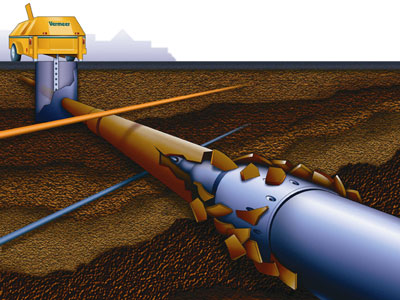
  2. Bursting Cone- A bursting cone is often attached to the head of the new pipe to break apart the old pipe as the new one is fed into the hole. This makes it possible to feed new pipe without having to remove the old pipe.
  3. New Pipe – There are a couple of options here including a brand new line of pipe replacing the old one or a liner being fed into the old one to patch cracks and leaks. The repair method used will depend on the severity of the problem, length of the affected pipe and recommendations from your plumber.
  4. Access Points – Two access points will be dug on either side of the affected pipe line. One pit houses the hydraulic pulling unit, the size of which will vary depending on the equipment used by your plumber and the power needed to pull your new pipe. The second pit is used to feed in new pipe, which means it needs to be slightly larger.

How the trenchless replacement process works depends largely on the pipe being replaced and which repair method you select. If you have a sewer line that has cracked along a five foot length, trenchless pipe replacement may be the best option. However, a smaller problem in your water line like a small crack may be fixed without a full replacement or relining. The best way to know for sure is to call a professional and have them inspect your pipe line. Video technology makes this easier as well.

Stages of Water Line Replacement Using Trenchless Technology: Some Pointers from Edison

Wednesday, November 16th, 2011

Replacing a water line in your Edison yard with trenchless technology is an impressive process. It is more technically advanced than the old method by leaps and bounds (in the past, the answer to a water line was a backhoe and a new pipe), and it can be cost effective in many instances, especially if the problem is only with a small length of pipe. Let’s take a quick look at the stages of pipe replacement should your water line need to be swapped out.

  1. Accessing the Water Line – The first step is to find the affected length of pipe. If it’s unclear where the problem is located in the pipe line, a hole may be dug (or an existing manhole used) to run a video inspection line and find the problem. In the case of a leak, this usually isn’t necessary.
  2. Inspecting and Clearing the Line – Once the leak is located, it’s time to clear out any existing water and/or debris or roots in the way of the new line.
  3. Setting Up the Equipment – There are several ways to go about replacing a pipe, but in all cases, a pair of access ports are dug on either side of the affected pipe line. On one end, the new pipe is fed in and on the other side a winch is used to pull the pipe through.
  4. Installing the New Pipe – Burstlining is a common method used to replace an old pipe. A burst cone attached to the front of the new pipe is pulled through the old pipe, breaking it apart as it’s fed through.
  5. Finishing the Process – Once the pipe line has been replaced it is connected to the water system and the pits are filled in. When done, there may be only a small reminder of the work that was done on your property.

At the end of the day, everything is cleaner, more environmentally friendly and in many cases, more cost effective. It’s a wonder anyone still uses the messy old method of digging up the entire yard just to rip out the pipe. But, they do, so if you find yourself with a burst water line, make sure to contact someone with the tools and experience needed to replace your pipe the right way.